Regular Spanish immersion
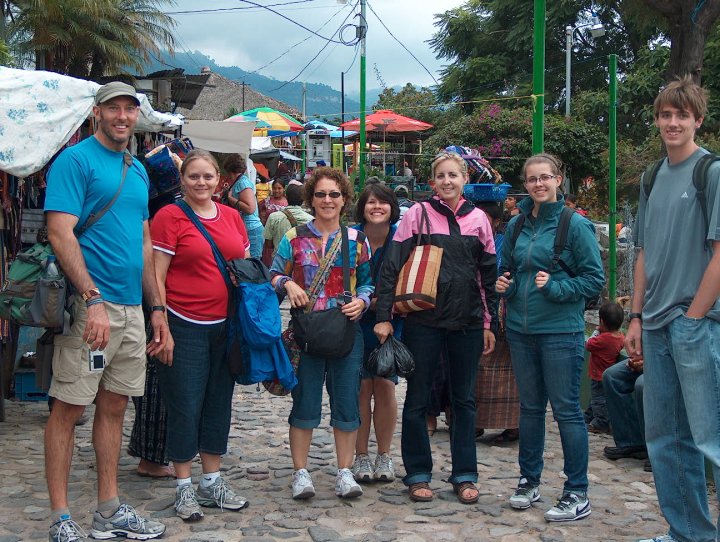
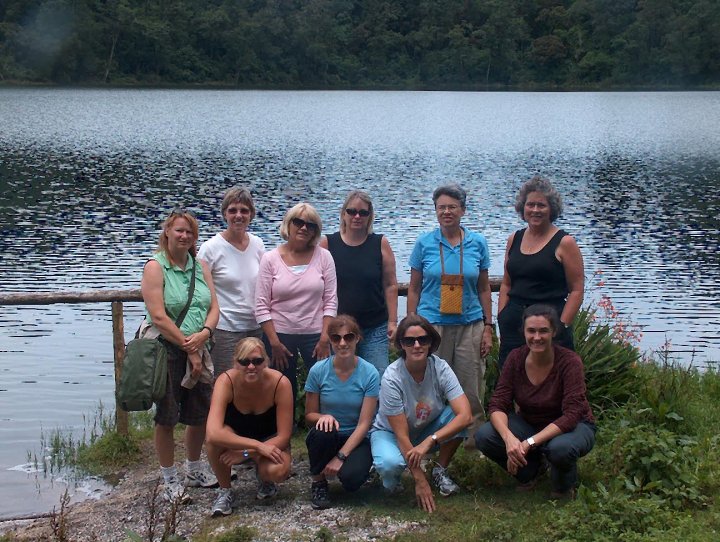
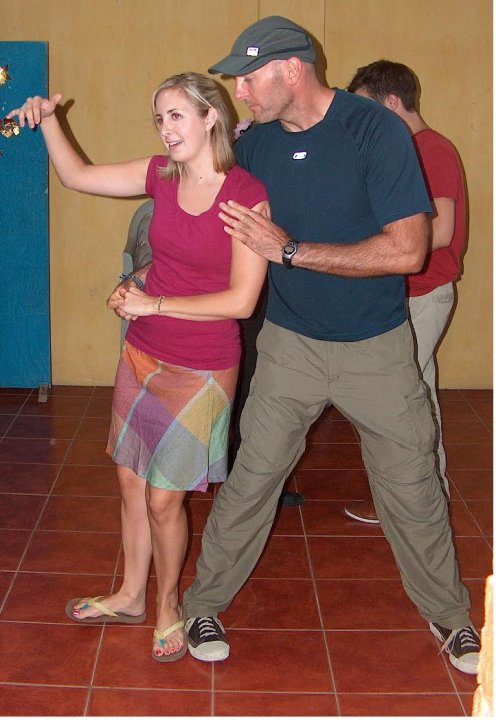
The regular Spanish immersion program is designed for students who want to learn Spanish at a normal pace in Quetzaltenango with a one teacher per student format, homestay with a local family, and daily social and cultural activities including field trips and excursions during the weekends. You may download our
CX is proud to announce that it has standardized Spanish I, II, III, and IV. For more information, please feel free to download the syllabus. You will know exactly what you will be learning in the weeks you will study with us.

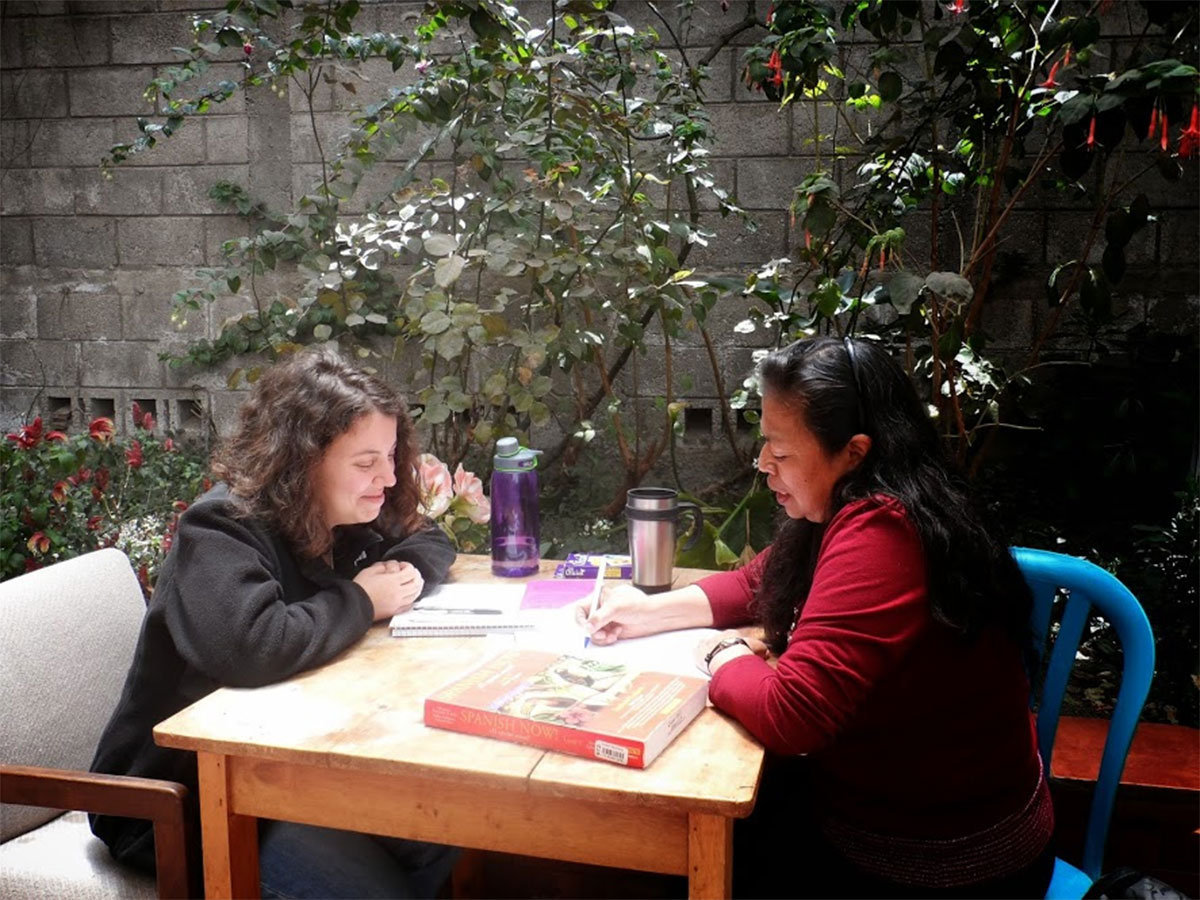



After your initial assessment, your teacher will write a lesson plan using the GANAG template which will have all the linguistic objectives of the week including what you will be learning each day, evaluations, homework, assignments. Here is a sample of our lesson plan that you can download.
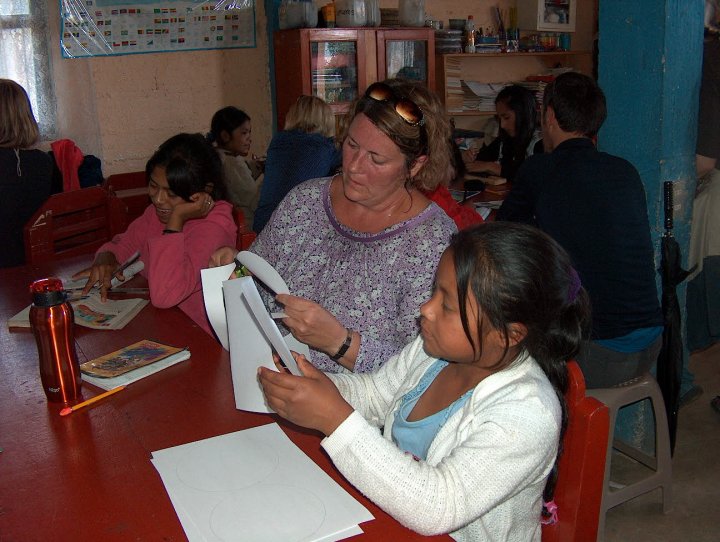
Our teachers have been extensively trained to provide students a more active role in their learning process with various interactive sessions (student-centered instruction).
As a result of this, our students are not just bystanders but actively involved in the language learning experience, which enables them to learn quickly in class. CX has provided a laptop computer to each teacher so they can use technology during their time in the classroom.
If you have limited time to study in Quetzaltenango, we recommend you take accelerated Spanish which is taught at a faster pace than regular Spanish. These courses require more homework than our regular Spanish program.
If you are looking for a more traditional program, we recommend you take Spanish for Travelers where you can shape the classes with your preferences. We also a special program for retirees.
For college students or teachers looking for college credits, please visit our Academic program where you will obtain information about this program.
We also offer study Spanish subjunctive for advanced students.
The methodology we use for our classes is based on Stephen Krashen’s “Comprehensive Input”.
1) The teacher introduces the topic to the student
2) the student reads the rules and forms his/her own rules about the subject
3) the teacher provides feedback with a discussion
4) the students watch or listen to the rules
5) the students practice exercises orally or written
6) the teacher provides feedback to the student
7) the student takes a quick exit quiz and
8) the teacher evaluates with an exit quiz
9) homework assignment and
10) a test to assess the weak points of the topic to reinforce it again.
Casa Xelajú has incorporated the American Council on the Teaching of Foreign Languages (ACTFL) standards into the teaching curriculum.
These standards are currently used by thousands of universities and school districts worldwide and are regarded as the highest quality of teaching.
Our teachers have more than 25 years of teaching experience and are fully licensed by the Ministerio de Education in Guatemala. They deliver the lessons with knowledge, enthusiasm, and linguistic skills.
Casa Xelaju is pleased to offer an alternative and unique Spanish curriculum for intermediate to advanced students who want to learn more about the current events in Guatemala (genocide, repression, mining, poverty, corruption, how the CIA overthrew Jacobo Arbenz Guzman ).
Studying these events will introduce a historical perspective based on internal and external affairs that have shaped Guatemalan society up to the 21st century. Read more..
Valerie Harley, an English teacher from Pennsylvania, talks about her learning experience in Xelaju. vharleg@fandm.edu
We strongly believe that through education we can change the world. For this reason, part of your payment will be used to help rural schools in Aldea Francisco Vela, Nuevo Palmarcito, Caserio Guadalupe, and La Pedrera Community Project to run the computer lab and pay for internet services.
The Secretary of Education mandates computer classes, which require parents from every community in the country to pay $100.00 a year per child to learn computer skills. With your help, students can take these classes at their local schools and no longer have to pay for private lessons.
We have successfully donated more than 60 computers and 20 musical instruments for the school band. With over 400 children now able to access computer classes, the computers we have donated have helped families save approximately $40,000 collectively each year. Your support is greatly appreciated!
We are currently offering more than 45 Spanish courses including test preparation for the DELE, OPI, Praxis II, BCLAD, TOPT, FSI, SAT II, CLEP, Content Knowledge 0191, MTEL among other tests.
Our program has been successfully incorporating the American Council on the Teaching of Foreign Languages (ACTFL) standards into its teaching curriculum (these standards are currently used by thousands of universities and school districts worldwide).
These standards are a tool that benefits our current and future students because we know with more precision the language level and experience the student is bringing with him/her. Therefore, there is no time wasted and no confusion the first week trying to measure the student’s level.
Furthermore, we are the only program in Guatemala with two academic agreements with two major universities in the United States.
Reviews and testimonials, find out why Casa Xelaju has 100% customer satisfaction. Follow us on Facebook
Holidays – No Classes. However, you have to pay for the five days. We have to obey the labor law, otherwise, we are fined by the government.
| January 1 | Good Friday |
| May 1 | June 25* |
| September 15 | October 20* |
| November 1* | December 25 |
Application form Tuition Spanish for Business Spanish for Health Care Workers Christian Spanish Spanish for Children
Our language learning format is one on one instruction, and our programs including Quiche (K’iche’) teachers have been extensively trained to give the students a more active role in their learning process (student-centered instruction).
As a result of this, our students are not passive but actively involved in their language learning experience, which enhances their ability to learn quickly in class.
We also offer Spanish test preparation for teachers, specialized and advanced Spanish, and Latin American literature courses to all interested students.
Video about our regular Spanish immersion program in Xelaju
Our official books for Spanish I, II, III, and IV: Spanish Now, Level 1, Seventh Edition, ISBN 0-7641-7774-5 and Spanish Now, Level 2, Seventh Edition, ISBN-10: 0764141104. Suggested book: a Spanish and English dictionary, and 501 Spanish Verbs by Christopher Kendris, (Barron’s Educational Series, Inc.).
Tuition Includes
- 5 hours of one on one instruction, 5 days a week.
- Private study rooms free of noise or visual interferences and with a beautiful view of the city.
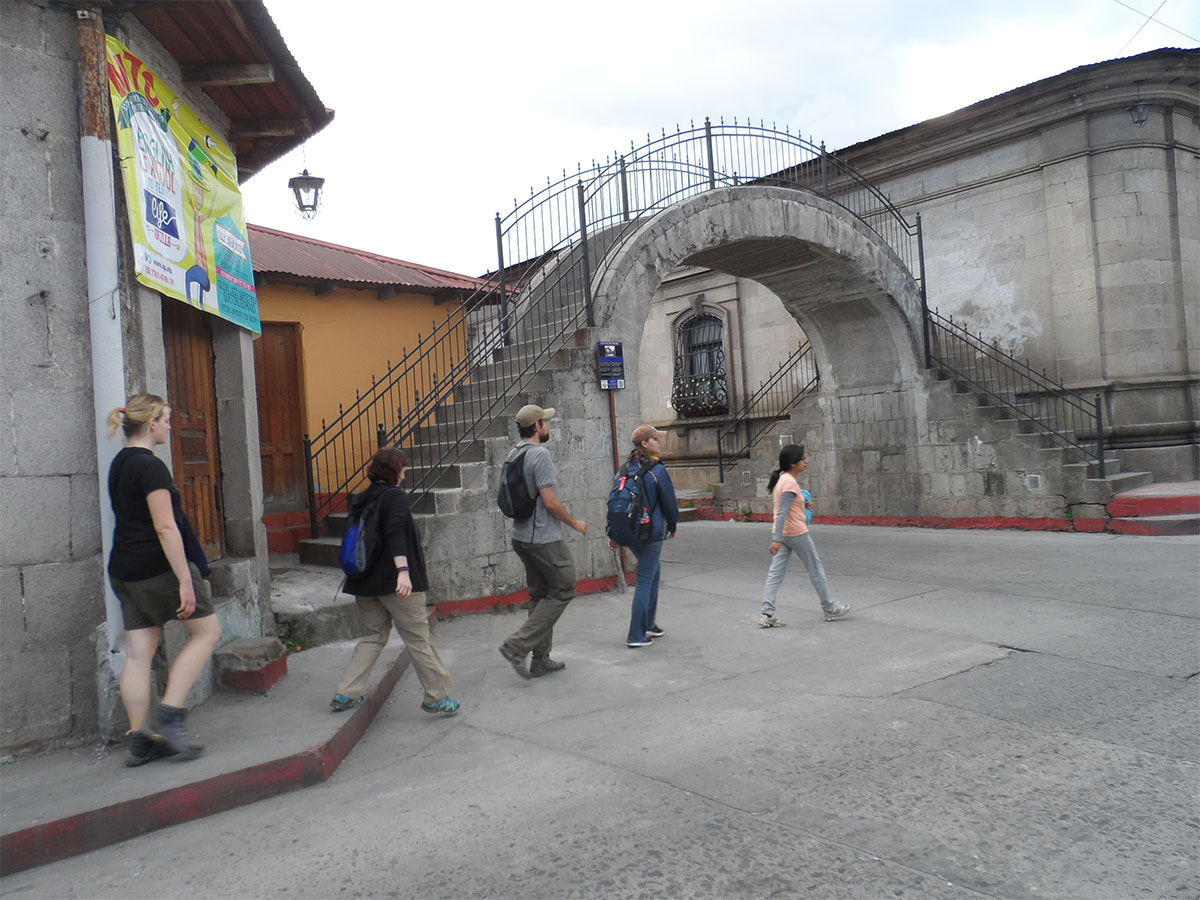
- approximately three hours of cultural activities daily.
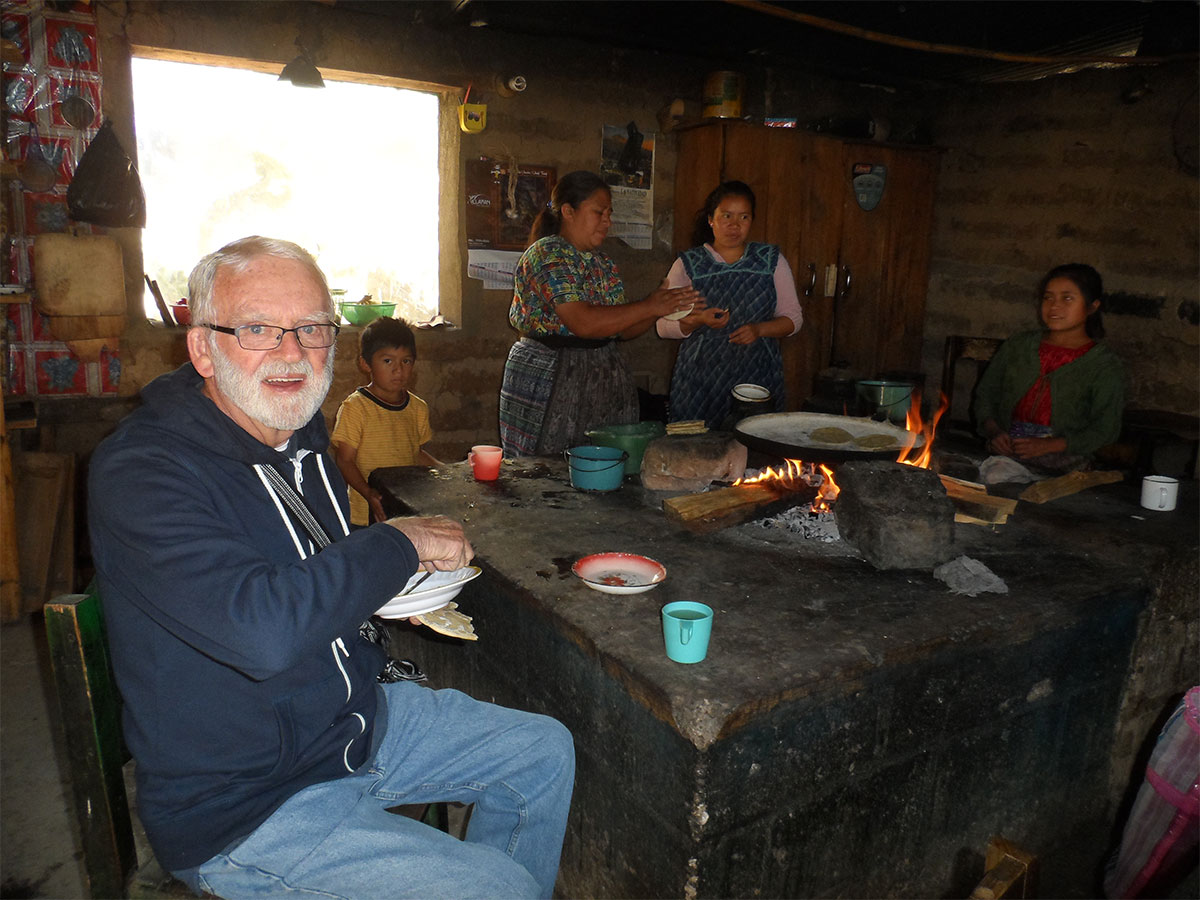
- homestay with a Guatemalan family, 3 meals daily, and a private bedroom.
- translation available.
- free unlimited WIFI access, and cheap international calls using our USA phone.
- lectures, conferences, and guide fees.
- free organic coffee, tea, and bread during break time every day.
- free access to the school’s library
(over 1000 books and a video library with nearly 200 DVDs & videos and educational movies).
* Laundry services and weaving lessons are available for an additional fee.
Casa Xelajú’s language programs are fully accredited by the Guatemalan Ministry of Education.
Casa Xelajú offers a variety of specialized courses tailored to your needs. You will find a few of them listed below. If you have an interest in specialized classes in a field that is not listed, please let us know and we can help you create a program precisely created to match your specific needs.
- Spanish Literature Program
- Semester Abroad
- Educators Program
- High School Program
- College Credit